 Nick Parker
Custom extruded rubber strips play a critical role in sealing, insulation, vibration control, and environmental protection across numerous industries. From automotive and construction to HVAC and electronics, these versatile rubber components are designed to provide long-lasting performance in demanding operating conditions.
Choosing the right custom extruded rubber strips manufacturer is essential for ensuring consistent quality, precise dimensions, and material performance. In this guide, we explore everything you need to know about custom extruded rubber strips, including materials, applications, benefits, manufacturing processes, and selection considerations.
What Are Custom Extruded Rubber Strips?
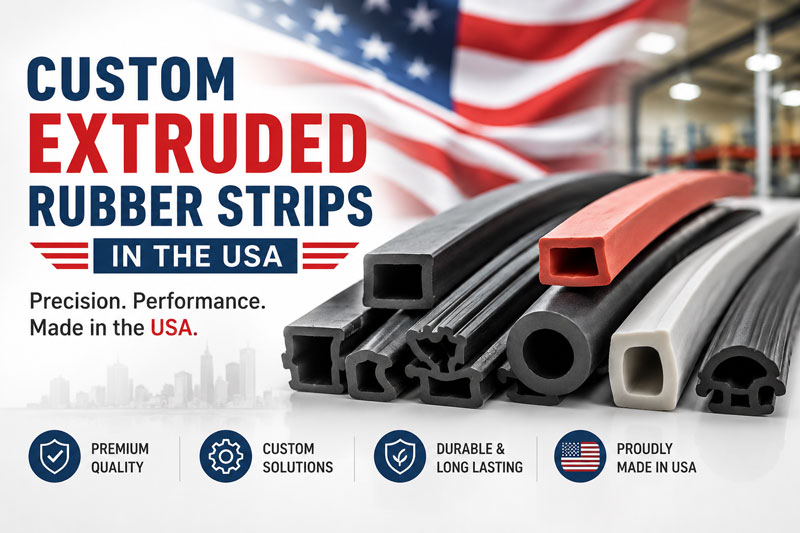
Custom extruded rubber strips are continuous rubber profiles manufactured through an extrusion process where uncured rubber compound is forced through a specially designed die to create a specific cross-sectional shape. Once extruded, the rubber is cured and finished to meet exact application requirements.
These rubber strips can be manufactured in various sizes, profiles, hardness levels, and materials to suit different environmental and industrial conditions.
Common uses include:
Weather sealing
Edge protection
Noise reduction
Vibration dampening
Water resistance
Dust prevention
Thermal insulation
Their flexibility and customization capabilities make them a preferred solution for industrial sealing and protection applications.
Why Industries Choose Custom Extruded Rubber Strips
Unlike standard off-the-shelf products, custom extruded rubber strips are designed specifically for the intended application. This ensures better performance, improved durability, and reduced maintenance requirements.
Key advantages include:
Precise dimensions and tolerances
Superior sealing capabilities
Enhanced weather resistance
Improved chemical resistance
Long service life
Cost-effective production for large volumes
Flexible design options
By tailoring the rubber profile to the exact application, manufacturers can achieve optimal performance while minimizing material waste and installation issues.
Common Materials Used in Custom Extruded Rubber Strips
The performance of an extruded rubber strip depends largely on the material selected. Each rubber compound offers unique characteristics suited for different environments.
EPDM Rubber
EPDM is one of the most widely used materials for outdoor applications due to its exceptional resistance to UV radiation, ozone, moisture, and extreme weather conditions.
Best applications include:
Window seals
Door seals
Roofing systems
HVAC equipment
Outdoor enclosures
Silicone Rubber
Silicone offers excellent temperature resistance and flexibility, making it ideal for environments that experience extreme heat or cold.
Common applications include:
Food processing equipment
Medical devices
Electronics
High-temperature sealing systems
Neoprene Rubber
Neoprene provides excellent resistance to weather, moderate chemicals, and mechanical wear.
Typical uses include:
Marine applications
Industrial machinery
Construction equipment
Protective sealing systems
Nitrile Rubber (Buna-N)
Nitrile rubber is highly resistant to oils, fuels, and petroleum-based fluids.
Industries commonly using nitrile include:
Automotive manufacturing
Oil and gas
Heavy machinery
Industrial equipment
Natural Rubber
Natural rubber offers excellent elasticity and abrasion resistance for general-purpose applications.
It is often used for:
Cushioning components
Shock absorption
Industrial protection systems
Industries That Use Custom Extruded Rubber Strips
Custom extruded rubber strips are used across numerous industries because of their durability and adaptability.
Automotive Industry
Automotive manufacturers rely on rubber strips for:
Door weather seals
Window channels
Trunk sealing systems
Noise reduction components
Vibration isolation
Construction Industry
In construction applications, rubber strips help provide:
Weatherproof sealing
Expansion joint protection
Water resistance
Building insulation
HVAC Systems
HVAC equipment uses extruded rubber strips for:
Air leakage prevention
Equipment insulation
Vibration reduction
Environmental sealing
Marine Industry
Marine environments demand materials capable of withstanding moisture and harsh conditions.
Common applications include:
Hatch seals
Boat compartment sealing
Dock protection systems
Water-resistant barriers
Electronics and Electrical Enclosures
Rubber strips help protect sensitive components from:
Dust
Water intrusion
Environmental contaminants
Mechanical vibrations
Understanding the Rubber Extrusion Process
The extrusion process is designed to create continuous rubber profiles with consistent quality and dimensions.
Step 1: Material Selection
Engineers select the appropriate rubber compound based on environmental exposure, temperature requirements, and application performance needs.
Step 2: Compound Preparation
Raw materials and additives are blended to achieve the desired physical properties.
Step 3: Extrusion
The rubber compound is pushed through a custom-designed die to create the required profile shape.
Step 4: Vulcanization and Curing
The extruded profile is cured using heat to improve durability, elasticity, and mechanical strength.
Step 5: Finishing and Cutting
The material is cut to specified lengths and finished according to customer requirements.
Step 6: Quality Inspection
Every profile undergoes inspection to verify dimensions, material consistency, and overall quality.
Benefits of Working with a Custom Rubber Extrusion Manufacturer
Partnering with an experienced manufacturer offers several advantages.
Custom Design Capabilities
Manufacturers can produce unique shapes and profiles that meet exact project requirements.
Material Expertise
Experienced manufacturers help customers select the most suitable rubber compound for performance and longevity.
Consistent Quality
Advanced manufacturing processes ensure uniform dimensions and repeatable product performance.
Scalable Production
Whether you require prototypes or large production volumes, custom extrusion processes support efficient manufacturing.
Cost Efficiency
Customized solutions often reduce assembly complexity and long-term maintenance costs.
How to Choose the Right Custom Extruded Rubber Strip
Selecting the right rubber strip requires evaluating several important factors.
Environmental Conditions
Consider exposure to:
UV radiation
Ozone
Moisture
Extreme temperatures
Chemical Exposure
Determine whether the component will come into contact with:
Oils
Fuels
Cleaning agents
Industrial chemicals
Mechanical Requirements
Evaluate:
Compression resistance
Flexibility
Abrasion resistance
Load-bearing requirements
Industry Standards
Some industries require compliance with specific regulatory standards for safety and performance.
Common Design Considerations
Before finalizing a custom rubber profile, engineers should consider:
Profile geometry
Wall thickness
Tolerance requirements
Installation method
Material hardness
Environmental exposure
Careful planning during the design phase helps ensure reliable performance and cost-effective production.
Frequently Asked Questions
What are custom extruded rubber strips?
They are continuous rubber profiles manufactured through an extrusion process and customized to specific dimensions and application requirements.
Which rubber material is best for outdoor use?
EPDM rubber is generally considered the best choice for outdoor applications due to its outstanding weather and UV resistance.
Can custom extruded rubber strips be manufactured in different colors?
Yes. Manufacturers can produce rubber strips in various colors depending on application and branding requirements.
Are extruded rubber strips waterproof?
When properly designed and installed, they provide highly effective protection against water intrusion.
What industries use custom extruded rubber strips?
Automotive, construction, HVAC, marine, electronics, aerospace, and industrial manufacturing industries commonly use them.
What is the difference between molded and extruded rubber products?
Extruded products are continuous profiles produced through a die, while molded products are created in individual shapes using molds.
How long do rubber extrusions last?
The lifespan depends on material selection and environmental conditions. High-quality EPDM and silicone extrusions can provide many years of reliable performance.
Conclusion
Custom extruded rubber strips are essential components for sealing, insulation, vibration control, and environmental protection across a wide range of industries. Selecting the proper material, profile design, and manufacturing partner ensures reliable performance, durability, and long-term value.
As a trusted custom extruded rubber strips manufacturer in the USA, Accuseal Rubber Inc. delivers precision-engineered rubber extrusion solutions tailored to customer specifications. With expertise in EPDM, silicone, neoprene, nitrile, and other specialty compounds, Accuseal provides high-quality custom rubber products designed to perform in demanding industrial environments.