 Nick Parker
Railway systems operate in some of the toughest environments imaginable. From extreme heat and freezing temperatures to constant vibration, moisture, dust, and electrical stress, every component used in trains and railway infrastructure must perform reliably under pressure. That’s why silicone rubber components for railway applications have become an essential part of modern rail engineering.
Whether it’s metro trains, freight railcars, high-speed rail systems, or railway electrical enclosures, silicone rubber plays a critical role in improving safety, durability, and long-term performance.
In this guide, we’ll explain:
- What silicone rubber components are used in railways
- Why railway manufacturers prefer silicone rubber
- Common railway applications
- Key benefits and material properties
- How to choose the right railway rubber components supplier
- Frequently asked questions buyers search online
At Accuseal Rubber Inc., we manufacture high-quality custom rubber components designed for demanding industrial and transportation applications.
What Are Silicone Rubber Components for Railway Applications?
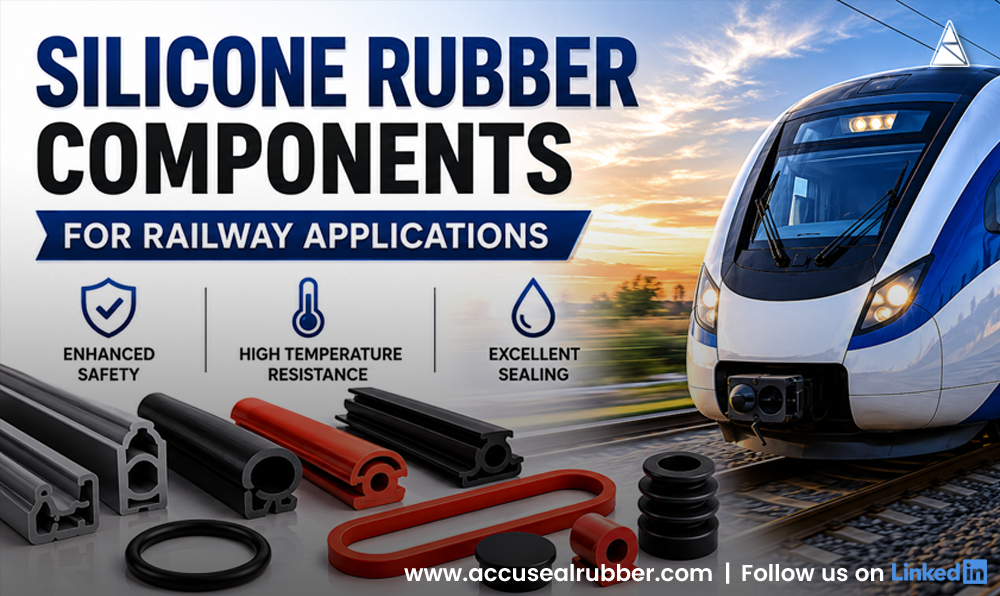
Silicone rubber railway components are specialized rubber parts designed to withstand harsh railway operating conditions. These parts are commonly used for:
- Sealing
- Insulation
- Vibration control
- Fire protection
- Weatherproofing
- Electrical safety
Because railway systems require long-lasting and high-performance materials, silicone rubber is often preferred over conventional rubber compounds.
Common railway silicone rubber products include:
- Silicone gaskets
- Extruded rubber profiles
- Rubber seals
- O-rings
- Cable protection boots
- Fire-resistant insulation components
- Silicone sponge seals
- Custom molded rubber parts
Why Is Silicone Rubber Used in Railway Systems?
One of the most common questions buyers ask is:
“Why do railways use silicone rubber instead of standard rubber?”
The answer lies in performance and safety.
Silicone rubber offers a unique combination of:
- High-temperature resistance
- Flame retardancy
- UV resistance
- Electrical insulation
- Flexibility under vibration
- Low smoke and low toxicity properties
These characteristics make silicone rubber ideal for railway environments where passenger safety and operational reliability are critical.
Key Benefits of Silicone Rubber Components in Railways
1. Excellent Temperature Resistance
Railway systems experience extreme environmental conditions. Silicone rubber can maintain flexibility and performance in both high and low temperatures.
This makes it ideal for:
- Outdoor railway equipment
- Engine compartments
- HVAC systems
- Electrical enclosures
2. Superior Flame Resistance
Railway safety standards often require materials that:
- Resist ignition
- Produce minimal smoke
- Emit low toxic gases during fire exposure
Flame-retardant silicone rubber helps railway manufacturers comply with strict transportation safety standards.
3. Weather and UV Resistance
Railway systems operate continuously outdoors. Silicone rubber withstands:
- Rain
- UV exposure
- Ozone
- Humidity
- Dust
- Pollution
This helps extend component lifespan and reduce maintenance costs.
4. Electrical Insulation Properties
Modern trains rely heavily on electrical systems. Silicone rubber provides excellent insulation for:
- Cable systems
- Connectors
- Junction boxes
- Electrical panels
- High-voltage components
5. Vibration and Shock Absorption
Railway equipment constantly experiences:
- Mechanical stress
- Continuous vibration
- Sudden movement
- Shock loads
Silicone rubber components help absorb vibration and reduce wear on surrounding equipment.
Common Railway Applications for Silicone Rubber Components
Railway Door and Window Seals
Door and window seals help:
- Prevent water ingress
- Reduce noise
- Improve passenger comfort
- Maintain temperature control
Custom extruded silicone profiles are commonly used in train coaches and metro systems.
Railway Electrical Enclosure Gaskets
Electrical systems require reliable sealing against:
- Moisture
- Dust
- Heat
- Corrosion
Silicone rubber gaskets help protect sensitive railway electronics.
HVAC Systems in Trains
Train HVAC systems depend on silicone rubber components for:
- Air sealing
- Heat resistance
- Flexible duct connections
- Vibration isolation
Cable Protection and Insulation
Silicone rubber is widely used for:
- Cable sleeves
- Wire insulation
- Cable entry seals
- Protective boots
These components improve electrical safety and durability.
Fire-Resistant Railway Components
Railway operators often require low-smoke, flame-retardant silicone rubber for:
- Passenger safety systems
- Emergency equipment
- Electrical insulation
- Interior train applications
Silicone Rubber vs EPDM for Railway Applications
Many buyers compare silicone rubber with EPDM. Here’s a quick comparison:
| Feature | Silicone Rubber | EPDM Rubber |
|---|---|---|
| High Temperature Resistance | Excellent | Moderate |
| Flame Resistance | Excellent | Limited |
| UV Resistance | Excellent | Excellent |
| Electrical Insulation | Excellent | Good |
| Flexibility in Extreme Temperatures | Excellent | Good |
| Railway Electrical Applications | Ideal | Limited |
| Cost | Higher | Lower |
Which Material Is Better?
- Use silicone rubber for high-temperature, electrical, and fire-resistant applications.
- Use EPDM rubber for outdoor weather sealing where extreme heat resistance is not required.
What Railway Buyers Look for in Silicone Rubber Components
If you are sourcing railway rubber parts, buyers typically prioritize:
Material Quality
Look for:
- High-grade silicone compounds
- Railway-compliant materials
- Consistent manufacturing quality
Fire Safety Compliance
Railway applications may require:
- Flame-retardant materials
- Low smoke generation
- Transportation safety compliance
Custom Manufacturing Capability
Many railway projects require:
- Custom extrusions
- Precision molding
- Application-specific designs
- Tight tolerances
Long-Term Durability
Railway systems operate continuously. Components should resist:
- Wear
- Fatigue
- UV exposure
- Temperature cycling
How Custom Silicone Rubber Components Improve Railway Performance
Custom-engineered railway rubber components offer several advantages:
Better Fit and Sealing
Custom profiles improve:
- Air sealing
- Water resistance
- Noise reduction
Reduced Maintenance Costs
Durable silicone rubber components last longer and reduce:
- Replacement frequency
- Downtime
- Repair costs
Improved Passenger Safety
High-performance rubber components contribute to:
- Fire safety
- Electrical safety
- Structural reliability
How to Choose the Right Railway Rubber Components Supplier
When selecting a supplier, ask these questions:
Do they offer custom manufacturing?
Custom railway applications often require non-standard designs.
Can they handle industrial-scale production?
Railway projects usually demand consistent, high-volume manufacturing.
Do they understand railway performance requirements?
An experienced supplier understands:
- Environmental exposure
- Mechanical stress
- Electrical insulation needs
- Fire safety considerations
Do they manufacture multiple rubber materials?
A versatile supplier can recommend the best material for each application.
At Accuseal Rubber Inc., we provide custom silicone rubber components, extruded profiles, molded rubber parts, and industrial sealing solutions tailored to demanding applications including transportation and industrial systems.
Frequently Asked Questions About Silicone Rubber Components for Railway Applications
What are silicone rubber components used for in railways?
Silicone rubber components are used for:
- Door seals
- Window gaskets
- Cable insulation
- Electrical panel sealing
- HVAC systems
- Fire-resistant components
- Vibration control
Why is silicone rubber preferred for railway applications?
Silicone rubber offers:
- Heat resistance
- Flame retardancy
- UV resistance
- Electrical insulation
- Long service life
These properties make it ideal for harsh railway environments.
Are silicone rubber railway components fire resistant?
Yes. Many railway-grade silicone rubber materials are designed to be flame retardant and produce low smoke and low toxic emissions.
What is the difference between silicone rubber and EPDM in railways?
Silicone rubber performs better in:
- High temperatures
- Electrical applications
- Flame-resistant environments
EPDM is commonly used for outdoor weather sealing applications.
Can silicone rubber railway parts be custom manufactured?
Yes. Custom manufacturing is common for:
- Extruded profiles
- Molded components
- Gaskets
- Seals
- Specialized railway applications
The Future of Silicone Rubber in Railway Infrastructure
As railway systems become more advanced, demand for high-performance rubber materials continues to grow.
Modern railway trends include:
- Electrification
- Smart rail systems
- High-speed rail
- Lightweight train design
- Enhanced passenger safety
These developments increase the need for reliable silicone rubber components that can handle demanding operational conditions.
Partner with Accuseal Rubber Inc. for Custom Railway Rubber Components
Finding the right rubber components supplier is essential for long-term railway performance and reliability.
Accuseal Rubber Inc. manufactures high-quality:
- Silicone rubber gaskets
- Custom extrusions
- Molded rubber components
- Industrial seals
- Weather-resistant rubber parts
- High-performance sealing solutions
Whether you need custom railway sealing solutions, flame-retardant silicone rubber components, or precision-engineered industrial rubber products, our team can help you find the right solution for your application.
Request a Quote Today
Looking for durable and high-performance silicone rubber components for railway applications?
Contact Accuseal Rubber Inc. today to discuss your project requirements, request a quote, or explore our custom manufacturing capabilities.