 Nick Parker
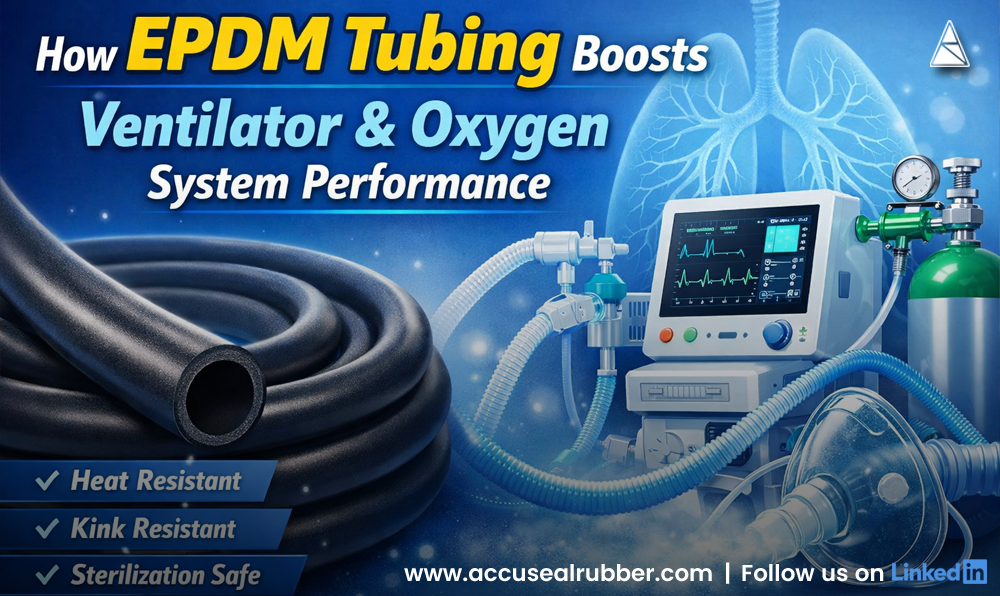
When engineers, procurement teams, or medical device manufacturers search for “best tubing for ventilators” or “oxygen delivery system tubing material,” one material consistently stands out: EPDM (Ethylene Propylene Diene Monomer).
But why is EPDM such a strong performer in modern ventilation, respiratory therapy, and oxygen delivery equipment?
What makes EPDM tubing more reliable compared to silicone, PVC, or NBR?
And how can medical manufacturers choose the right EPDM specification for their device?
What Is EPDM Tubing and Why Is It Used in Respiratory Systems?
EPDM tubing is a flexible synthetic rubber tube known for its:
High heat resistance
Steam and moisture resistance
Chemical stability
Excellent elasticity
Strong environmental durability
These properties make it especially effective for:
Ventilators
CPAP/BiPAP systems
Oxygen concentrators
Nebulizers
Humidifiers and breathing circuits
Portable emergency oxygen kits
Because respiratory equipment must handle warm air, humid conditions, sterilization cycles, and consistent airflow, EPDM is one of the safest and most dependable materials available.
How EPDM Tubing Improves Performance in Ventilation & Oxygen Delivery Systems
Below are the most important ways EPDM enhances reliability, safety, and long-term performance.
1. Heat and Steam Resistance for High-Humidity Respiratory Devices
Ventilation and oxygen delivery systems often run with warm, humidified air, especially in:
ICU ventilators
Heated breathing circuits
Respiratory humidifier lines
Why EPDM helps:
EPDM maintains flexibility even at elevated temperatures (up to 150°C). It does not warp, crack, or stiffen under continuous exposure to heat and moisture.
This improves:
Flow consistency
User comfort
Device durability
Clinical safety
SGE-friendly answer:
EPDM tubing is ideal for high-humidity oxygen systems because it withstands heat and steam without deforming.
2. Superior Kink Resistance for Stable Airflow
Kinking is a major issue in respiratory tubing, leading to:
Reduced oxygen flow
Pressure buildup
Alarms in ventilators
Interrupted patient support
EPDM’s natural flexibility and elastic memory prevent kinks, even during bending or patient movement.
Benefits for ventilator manufacturers:
Smoother airflow
Fewer technical disruptions
Better patient outcomes
Reduced maintenance
3. Excellent Chemical and Disinfectant Resistance
Respiratory systems must be cleaned frequently using:
Alcohol-based disinfectants
Detergents
Steam sterilization
EtO sterilization
High-level disinfectants
PVC and silicone often degrade under such repeated exposure, but EPDM remains stable and non-reactive.
Result:
Longer tubing life
Reduced risk of contamination
Safer patient use
4. Compatibility With Sterilization Methods
EPDM tubing works with multiple sterilization methods, including:
| Sterilization Method | EPDM Compatibility | Notes |
|---|---|---|
| Autoclave / Steam | ✔ Excellent | No deformation |
| Ethylene Oxide (EtO) | ✔ Excellent | Common in hospitals |
| Gamma Radiation | ✔ Good | Controlled doses recommended |
| Chemical Cleaners | ✔ Excellent | No cracking or swelling |
This versatility makes EPDM ideal for reusable respiratory equipment.
5. Non-Toxic, Non-Leaching, and Biocompatible
EPDM medical-grade tubing is formulated to be:
Non-reactive
Non-allergenic
Free from harmful plasticizers (unlike PVC)
Non-leaching
This ensures:
No chemical contamination in oxygen lines
Safe long-term use
Reliable performance in critical-care devices
For oxygen therapy, material purity is especially important. EPDM ensures clean oxygen delivery without introducing unwanted compounds.
6. Consistent Flow Performance and Dimensional Stability
For ventilators and oxygen concentrators, ID (Inner Diameter) precision is critical for:
Maintaining accurate flow rates
Avoiding turbulence
Ensuring pressure stability
EPDM tubing provides excellent dimensional stability, even during:
Heat exposure
Device movement
Long-term use
This increases the reliability of respiratory equipment—especially ICU and emergency systems.
7. Cost-Effective Material for High-Volume Medical Manufacturing
Compared to silicone, EPDM offers:
Lower cost
Better abrasion resistance
Greater durability in humid environments
For manufacturers producing tens of thousands of respiratory kits, EPDM tubing delivers exceptional value without compromising performance.
How to Select the Right EPDM Tubing for Ventilation and Oxygen Systems
Here is a quick buying guide manufacturers can use:
1. Determine Required Durometer (Hardness)
50–60 Shore A: Most flexible, ideal for kink-free oxygen lines
70 Shore A: Standard for ventilator tubing
80 Shore A: Durable, used in connectors or fittings
2. Choose Precise ID/OD Dimensions
Critical for airflow performance.
Standard tolerances should be discussed with the manufacturer.
3. Confirm Sterilization Method Compatibility
Match tubing to:
Autoclave cycles
Chemical exposure
Radiation needs
Cleaning frequency
4. Check Regulatory Requirements
Ask for:
Material data sheet (MDS)
Biocompatibility certification
FDA/USP Class VI compliance (if applicable)
5. Choose the Right Supplier
A reliable EPDM tubing manufacturer should offer:
Consistent extrusion quality
Tight tolerances
Custom sizes
Fast lead times
Medical-grade raw materials
Engineering support
This is where Accuseal Rubber Inc. excels.
FAQs
1. Is EPDM tubing safe for oxygen delivery systems?
Yes. Medical-grade EPDM is non-toxic, non-leaching, and stable under oxygen exposure.
2. How long does EPDM tubing last in ventilator systems?
EPDM often lasts longer than PVC or NBR due to its superior heat, moisture, and chemical resistance.
3. Can EPDM tubing be sterilized in an autoclave?
Yes. EPDM is one of the best materials for steam sterilization and repeated autoclave cycles.
4. Does EPDM work in heated breathing circuits?
Absolutely. EPDM maintains flexibility and does not deform in high-temperature humid environments.
5. What sizes of EPDM tubing are available for medical devices?
Custom ID and OD sizes can be extruded depending on airflow requirements. Manufacturers like Accuseal Rubber Inc. can produce precise, custom dimensions.
Why Choose Accuseal Rubber Inc. for EPDM Respiratory Tubing?
Accuseal Rubber Inc. specializes in custom EPDM tubing designed for medical and respiratory applications. With years of experience in precision rubber extrusion, we offer:
Medical-grade EPDM compounds
Tight dimensional tolerances
Custom ID/OD options
High-volume production capability
Fast sampling and prototyping
Competitive pricing
USA-based technical support
Whether you need tubing for ventilators, oxygen concentrators, or respiratory therapy equipment, our team ensures world-class quality and fast turnaround.
Ready to Source High-Performance EPDM Tubing?
If you’re developing or upgrading ventilation equipment or oxygen delivery systems, we’d be happy to help you choose the right EPDM tubing specification.
👉 Request a quote
👉 Share your drawings or sample
👉 Contact Accuseal Rubber Inc. for custom EPDM tubing solutions
Let’s build safer, more reliable respiratory devices together.