 Nick Parker
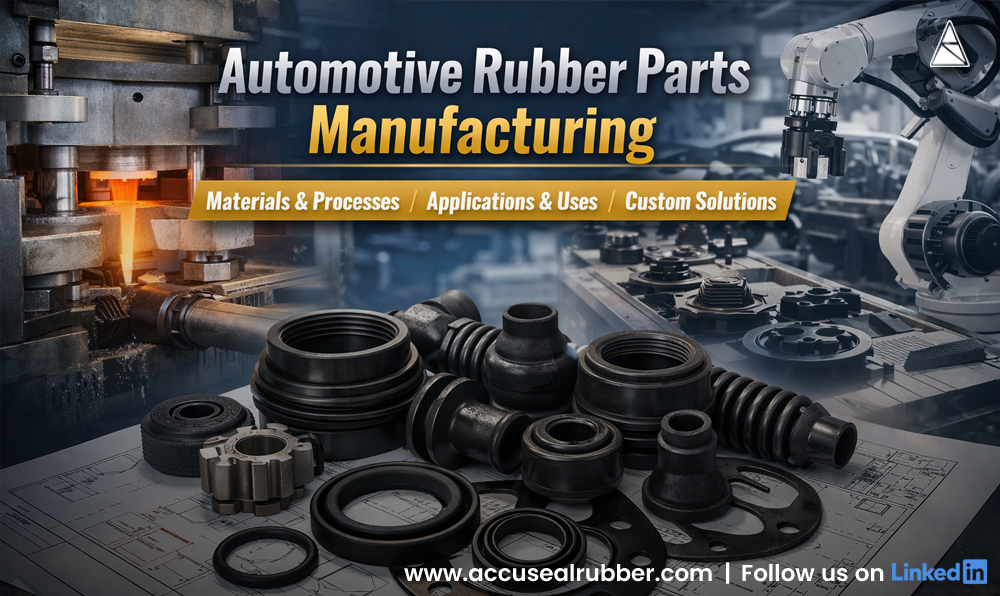
The automotive industry relies heavily on rubber components—often unseen, yet absolutely critical to vehicle safety, performance, and longevity. From sealing systems to vibration control, automotive rubber parts play a vital role in ensuring reliability under extreme operating conditions.
As vehicle designs become more advanced and regulatory standards more demanding, manufacturers and OEMs are increasingly searching for reliable automotive rubber parts manufacturers who can deliver precision, consistency, and compliance.
This guide explores automotive rubber parts manufacturing in detail, including materials, processes, applications, quality standards, and how to choose the right supplier—while also linking you to a deeper overview of professional manufacturing capabilities.
What Are Automotive Rubber Parts?
Automotive rubber parts are engineered components used in vehicles to provide:
Sealing and leak prevention
Shock absorption and vibration damping
Noise reduction
Thermal and chemical resistance
Electrical insulation
These components must perform reliably despite exposure to heat, oil, fuels, UV radiation, ozone, pressure, and constant motion.
Common automotive rubber parts include:
Rubber gaskets and seals
O-rings
Hoses and tubing
Bushings and mounts
Weatherstrips
Rubber pads and isolators
Why Automotive Rubber Parts Manufacturing Requires Expertise
Unlike general rubber products, automotive rubber components must meet tight tolerances and strict performance standards. A minor defect can lead to leaks, noise issues, or system failures.
Key challenges include:
Operating temperature extremes
Continuous vibration and stress
Long-term material aging
Compatibility with fuels, lubricants, and coolants
Compliance with automotive quality standards
This is why working with a specialized manufacturer like Accuseal Rubber Inc. is critical for OEMs and Tier suppliers.
Common Materials Used in Automotive Rubber Parts
Selecting the right elastomer is the foundation of successful automotive rubber parts manufacturing.
1. EPDM Rubber
Best for:
Weather seals
Door and window gaskets
Cooling system components
Key benefits:
Excellent ozone and UV resistance
Performs well in hot and cold environments
2. Nitrile Rubber (NBR)
Best for:
Fuel system seals
Oil-resistant gaskets
Hydraulic components
Key benefits:
Strong resistance to oils and fuels
Good mechanical strength
3. Silicone Rubber
Best for:
High-temperature seals
Electrical insulation
Under-hood components
Key benefits:
Wide temperature range
Excellent flexibility and durability
4. Neoprene Rubber
Best for:
Engine mounts
Belts and hoses
Key benefits:
Balanced resistance to oil, weather, and aging
Automotive Rubber Parts Manufacturing Processes Explained
Understanding manufacturing methods helps buyers select the right supplier.
Compression Molding
Ideal for simple, thick rubber components
Cost-effective for medium-volume production
Injection Molding
High precision and repeatability
Suitable for complex automotive rubber parts
Transfer Molding
Combines accuracy and material efficiency
Used for bonded rubber-metal parts
Extrusion
Perfect for continuous profiles like weatherstrips and seals
Each process must be carefully controlled to ensure consistent hardness, tensile strength, and dimensional accuracy.
Key Applications of Automotive Rubber Components
Automotive rubber parts are used across nearly every vehicle system:
Engine & Powertrain
Valve cover gaskets
Oil seals
Hose assemblies
Chassis & Suspension
Rubber bushings
Shock absorber mounts
Body & Interior
Door seals
Trunk and window weatherstrips
Noise-dampening components
Electrical & Thermal Systems
Insulation boots
Heat-resistant grommets
Quality Standards in Automotive Rubber Parts Manufacturing
Buyers often ask:
What quality standards should automotive rubber parts meet?
A professional manufacturer follows:
Strict material traceability
Dimensional inspection
Durometer and tensile testing
Heat aging and compression set testing
High-quality automotive rubber parts manufacturing ensures:
Longer component life
Reduced warranty claims
Improved vehicle safety
How to Choose the Right Automotive Rubber Parts Manufacturer
If you’re sourcing rubber components, ask these critical questions:
1. Do they offer custom rubber manufacturing?
Custom tooling and compound formulation are essential for OEM and aftermarket applications.
2. Can they handle material selection?
An experienced supplier will recommend the best elastomer, not just manufacture what’s requested.
3. Are they capable of low and high-volume production?
Scalability matters as your production needs grow.
4. Do they serve automotive OEMs and Tier suppliers?
Automotive experience ensures process control and compliance.
Why Custom Automotive Rubber Parts Matter
Off-the-shelf parts often fail to meet specific performance needs. Custom automotive rubber parts provide:
Exact fit and sealing performance
Optimized material properties
Better resistance to real-world operating conditions
This is especially important for engine sealing systems, suspension components, and weatherproofing applications.
Automotive Rubber Parts Manufacturing for OEMs & Aftermarket
Both OEM and aftermarket buyers demand:
Consistent quality
Competitive pricing
Reliable lead times
A specialized manufacturer bridges the gap between engineering precision and cost efficiency, ensuring components perform as intended throughout their lifecycle.
For a deeper look at professional capabilities, materials, and applications, explore this detailed page on automotive rubber parts manufacturing:
👉 https://www.accusealrubber.com/automotive-rubber-parts-manufacturing/
FAQs: Automotive Rubber Parts Manufacturing
What rubber is best for automotive sealing applications?
EPDM and NBR are most commonly used, depending on exposure to weather or oils.
Can automotive rubber parts be custom-made?
Yes. Custom molds and compounds allow manufacturers to meet exact design and performance requirements.
How long do automotive rubber components last?
With proper material selection, high-quality rubber parts can last 5–10 years or more, depending on usage and environment.
Are automotive rubber parts heat-resistant?
Certain materials like silicone and EPDM are designed to withstand high temperatures under the hood.
How do I get a quote for custom automotive rubber parts?
Most manufacturers require drawings, material specifications, quantities, and application details.
Final Thoughts: Partner with the Right Automotive Rubber Manufacturer
Automotive rubber parts may seem small, but their impact on vehicle performance and safety is massive. Choosing the right manufacturing partner ensures durability, compliance, and long-term cost savings.
If you’re looking for custom automotive rubber parts manufacturing, expert material guidance, and consistent quality, Accuseal Rubber Inc. offers solutions tailored to OEMs, Tier suppliers, and aftermarket needs.
📩 Ready to Get Started?
Request a quote
Discuss custom rubber requirements
Explore automotive-grade rubber solutions
👉 Visit: https://www.accusealrubber.com/automotive-rubber-parts-manufacturing/